Written on March 20, 2010 at 5:08 pm
Filed under: Article with tags: amigurumi, eye choices
They say that eyes are the windows to a person’s soul. But how does that translate for amigurumi? One of the things that I like doing is having an assortment of different eye choices when I’m making a project, just so I can make a decision about what the final look is going to be. I present to you three different eye options: safety eyes, yarn eyes (crocheted/knitted and embroidered) and button eyes. I also include my personal thoughts on them as well as some safety issues you may want to take into consideration.
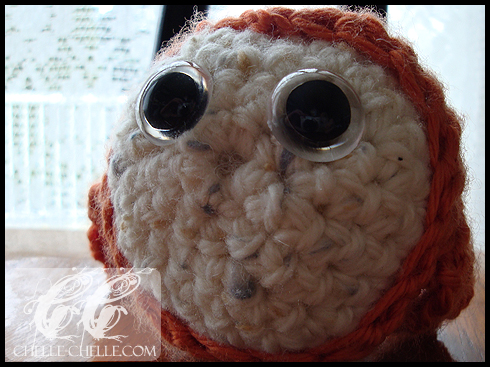
Safety Eyes
Incredibly popular, safety eyes are most commonly used in commercially produced stuffed animals and can be bought in stores – some general craft stores will carry them, as well as some fabric stores and online websites. Safety eyes have require some assembly – there’s the piece for the eye that has a post and a washer (metal or plastic). What you do is put the post through the piece and then place the washer over the post and push it down the post until it’s all the way down. Safety eyes are very snug and difficult to pull apart. However, a safety concern is that crocheted or knitted fabric can fray or the spaces between the stitches (especially in crochet) can stretch or get larger, allowing the eye (washer and all) to come through, creating a choking hazard for children and pets. One way to remedy this is to use a small piece of felt between the washer and the crocheted/knitted fabric. Safety eyes can be pricey, if you’re purchasing them in pairs, so consider a bulk purchase – this would require you to buy a large amount of eyes in the same size and colour though. So if you’re an occasional amigurumi creator, you might want to consider other eye options as this would be an expensive option for you.
Safety Factor: relatively child-safe (can be reinforced, if assembled correctly)
Cost Factor: most expensive
Read the rest of this entry »
Written on February 19, 2010 at 12:27 pm
Filed under: Article,Frugal Jewellery Designer with tags: Jewellery
Making jewellery is one of my hobbies that I’ve had for the longest period of time and over the years, I have spent a lot of money on beads and other materials. What I do like about the hobby is getting a good deal on my supplies so I don’t pour all of my money into the materials that I need. Here are some of my bead buying tips:
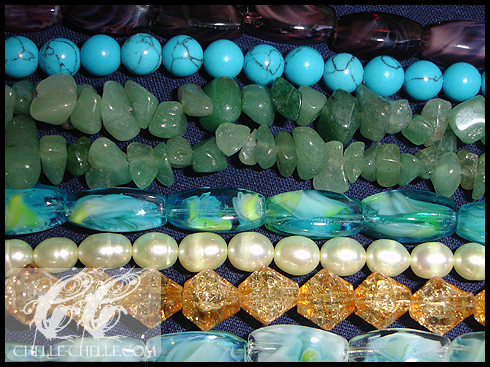
Craft stores and craft departments for general shopping needs
When I was 12 and going to stores to buy beads, it was difficult for me to go find non-plastic beads in places other than stores dedicated to selling craft supplies. But since then, the interest in making jewellery has grown and many other people make jewellery too. Craft departments in department stores have some pretty good selections for seed beads. General crafts stores (like Michaels) do carry decent bead selections. I also like to check out the clearance sections – I’ve bought strands of glass beads marked down from $10 to $1.50. Good deals can be found, if you’re willing to search for them as well as using coupons (they can come in weekly fliers or online).
- Always check out the clearance section/aisle for more good deals
- Join the mailing list on the store’s website for coupons, if they have them available
Some of my favourite beads have been found at craft stores, especially after my local chain craft store was given a makeover. Now I purchase freshwater pearls and turquoise beads when they come up on sale. I never pay full price on the beads that I buy at the craft store, never. I even bought my pliers with 40% off coupons at the same store. It’s a great resource and there’s no excuse to be paying full price at chain craft stores.
Read the rest of this entry »
Written on January 19, 2010 at 3:15 pm
Filed under: Article with tags: yarn shopping
I love shopping for yarn. My yarn weight of choice is generally sport weight or worsted weight. I’ve been known to buy sock-weight and bulky though, on a whim. I have been guilty of buying yarn mostly because it happened to be on sale. Bad, I know. I’ve gotten better now! I only buy yarn now if I see a project in mind for it, or if I have a project in mind already prior to purchasing the yarn. So here are some things that I suggest that you do (or don’t!) while shopping for yarn:
- DO pick up the balls/skeins of yarn to feel how the yarn feels against your skin. A great place to test is the back of your hand or wrist.
- DON’T pick up the balls/skeins of yarn and rub it against your cheek. Especially if you’re wearing cosmetics and get your makeup all over the yarn.
- DO look at those pads of free patterns hanging by the yarn – take one!
- DON’T look at those pads of free patterns and then rip several off for yourself, or rip them in half and leave the other half on the pad or on the floor.
- DO put the yarn back in the correct bin/box/shelf when you’ve decided that you don’t want to purchase it.
- DON’T leave the yarn on the ground or on a random shelf.
- DO choose enough yarn for your project – you never know if it’s going to be available the next time you go. Make sure you pick all from the same dye lot!
- DON’T buy yarn just because it is on sale/heavily discounted. Buy yarn that is in colours that you like, buy types of yarn that you will actually use and can see yourself using. If you hate working with anything thinner than worsted weight, why would you buy it just because it’s 50% off?
- DO substitute yarns for the ones that are called for in patterns. Could that brand of yarn be discontinued? Or maybe the pattern calls for something with 50% cashmere and the cost is too high? Look for appropriate substitutions. You’ll want something with the same weight and similar content (substituting cashmere-merino with acrylic fun fur will not get the same results as in the photos).
- DON’T juggle yarn balls in the middle of the store. I’ve seen this happen before and it ended badly as the yarn ended up on the store floor.
- DO go shopping with a budget in mind. Don’t spend more than you want to spend. Only want to spend $50 on yarn? Only spend $50 on yarn!
- DON’T go shopping with an open-budget or a credit card with plenty of space for a huge yarn purchase. I’ve witnessed my sister do this. Half an hour later, she dropped $80+ on yarn (beautiful yarn, but yarn that has stayed untouched for over a year).
Happy smart yarn shopping!
Written on January 1, 2010 at 1:17 pm
Filed under: Article with tags: fibre talk
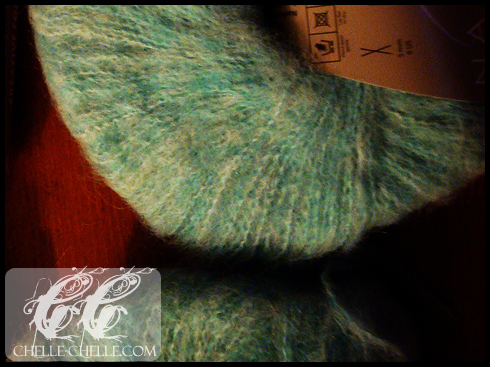
100% alpaca yarn, like the yarn shown above, has washing instructions on the yarn label. For this yarn, it is handwashing only in cold water. Gentle handwashing versus the washing machine can mean the difference between a sweater that fits and one that is suddenly several sizes too small.
What happens when you toss a knitted or crocheted item into the washing machine?
It can be fulled (not felted) or it doesn’t – what makes this difference? The type of fibre makes a huge difference in what happens to the final product.
What is fulling?
If you take animal fibres (i.e. wool, which comes from sheep) and make it up into a fabric (i.e. crochet, knit or weave with it) and subject it to water, agitation and (sometimes) heat, you get a dense fabric.
For example, say you knit a pair of mittens for someone out of wool and then they toss those mittens into the washing machine. And then they come out roughly the size of an infant’s finger. The mittens will have shrank, the stitches are no longer visible and the fabric is dense.
Read the rest of this entry »
Written on December 22, 2009 at 12:05 am
Filed under: Article with tags: amigurumi, Crochet, knit
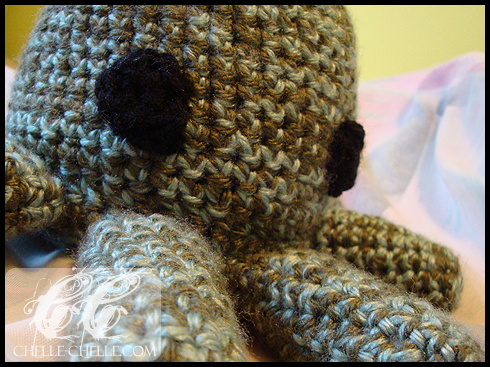
What is amigurumi? Where did the word come from? How the %#*! do I pronounce it?
All very good questions!
Amigurumi is a Japanese word and encompasses knitted and crocheted toys – usually animals or human-like dolls. They generally have cute features (like big eyes), are made of yarn, stuffed with love (or polyester stuffing). Due to the nature of the stuffie (or amigurumi, I just find ‘stuffie’ to be a lot easier, and quicker, to type out), it is generally recommended that you use a smaller size crochet hook or knitting needles when making them in order to ensure that you are making a tight fabric. This makes sure that when you stuff (with love!) that the stuffing does not show through.
Read the rest of this entry »
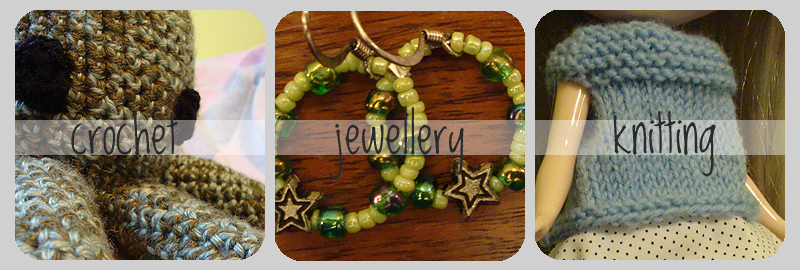

 Chelle-Chelle.com is many things; a collection of crocheted goodness, a series of crafting articles, a smattering of knitting projects from a very challenged knitter and a showcase of original jewellery designed and created by me, Michelle.
